

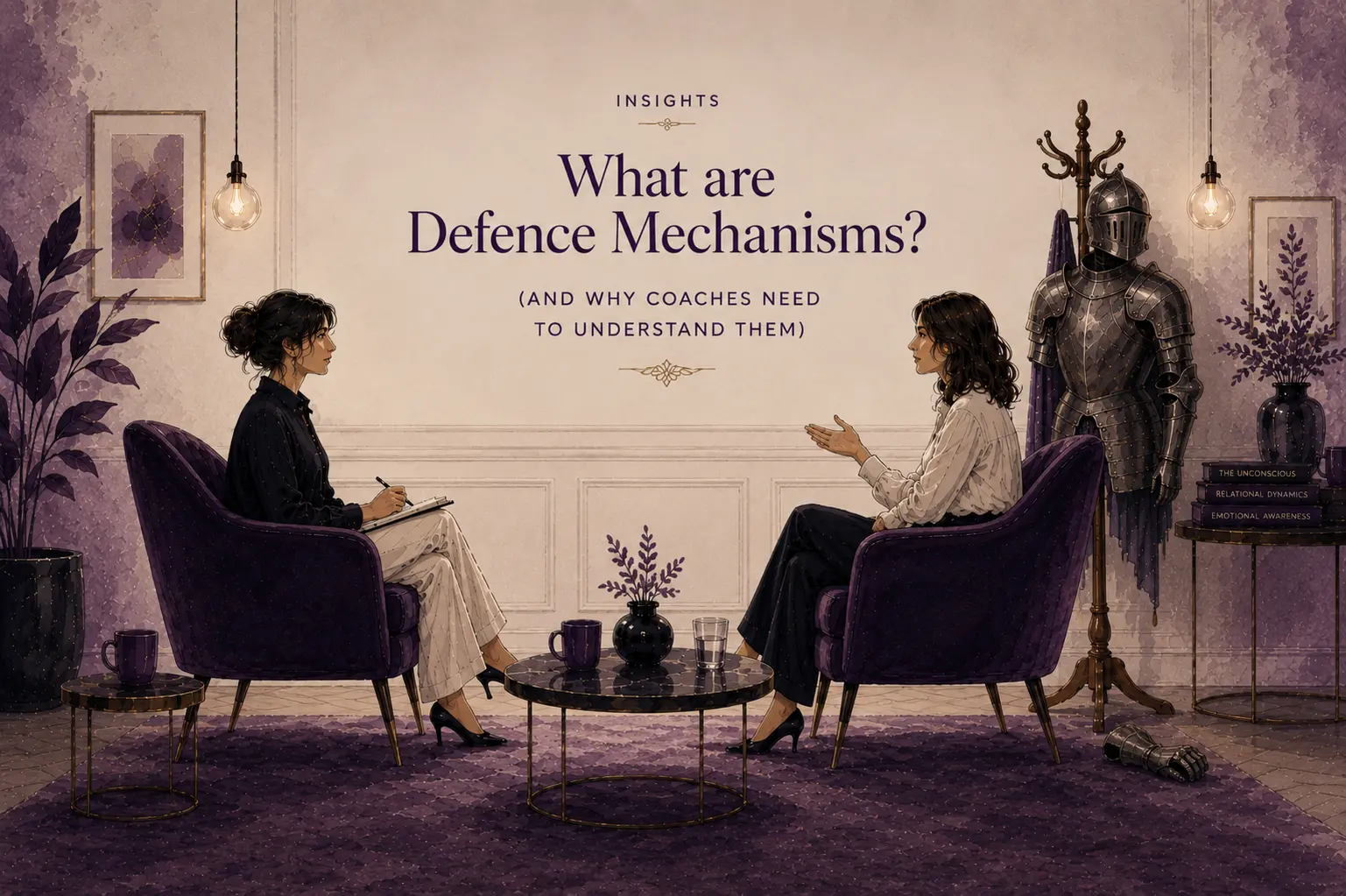
Defence mechanisms… The term itself sounds like something straight out of a Harry Potter novel/ film (pick your medium), and straight away we think it refers to things that we should avoid. Often we’ll throw around the phrase “you’re being defensive” as an insult, a criticism or something that somebody needs to change about themselves. And yet let’s really think about this. What are we actually doing when we are defending ourselves?
Every single one of us uses defence mechanisms. We always have done, and we always will. They are an extremely human response. We are protecting ourselves from a perceived threat, either internally or externally, and the anxiety that comes along with this threat. Because what we want to do, at all costs, is to protect ourselves from unbearable anxiety.
As we grow we will have developed our own tried and tested ways of protecting ourselves. Some are going to be more unconscious than others. The general rule of thumb being the longer it has been installed in your system as one of your go-to responses the less aware that you will be that you do it. We’ve set up these behaviours because at one point they did actually help us. And so our minds retained them as part of our blueprint. Our brains use up a huge amount of energy throughout the day and so will do whatever they can to be efficient. One of those energy-saving measures is returning to well-worn patterns of behaviour because, once upon a time, they worked.. We aren’t having to come up with new ways of dealing with the lions, tigers and bears that we think we’re about to encounter, either literally or metaphorically.
What type of behaviours am I talking about here? I could be very boring (and a bit lazy) and list out a whole array of different defence mechanisms. But there are far too many to consider that. Sometimes we are a bit brittle, sometimes we withdraw, sometimes we say too much and sometimes we lead people a merry dance with our conversation. Generally speaking, when we are using a defence mechanism we are trying to keep ourselves safe. That might mean withdrawing from our social connections, it might mean withdrawing from ourselves. This once did what it needed to in that moment, so our minds do the easiest thing possible, and bring out its trusty formula for getting us through whatever is causing us anxiety there and then. It’s a bit like a piece of software we once wrote for ourselves when we were young and have continued to hang onto throughout the years.
But a programme that once worked well on a Sinclair ZX Spectrum might not have the same impact on a new MacBook. We aren’t operating in the world that we were when we set up the response, so there’s every chance it’s not fit for purpose anymore. Although it’s important to note this is not necessarily the case in every situation. Sometimes they are exactly what we need.
As coaches we really do need to know about defence mechanisms. They’re in the room with us, brought in by ourselves and our clients. Even from the very first session when we’re both a bit nervous, they will be in the room. Understandable as we’ve never worked together before. But do we need to mention them every time we spot them? And if we are mentioning them, who are we actually doing this for?
Working with defence mechanisms is quite tricky for coaches. It’s not a case of us steaming in and cutting the client off with “you know what your issue is, don’t you? you’re rationalising.”. Not helpful and quite possibly not true either. But for the client in that moment it might be the very thing that’s keeping them going through an incredibly difficult situation. For us to go in and dismantle it… Not only is that unhelpful, it may remove something they genuinely need.
There’s another question worth asking too. If we feel the need to point it out immediately, who is that really for? The client? Or ourselves? We’re showing the client just how clever we are (or think we are) by sharing our interpretation. I’m not saying don’t make a note of it, far from it. This is absolutely something that should be going on a mental Post-it note either for supervision or to discuss with the client at a later date when it could be useful to reflect on what helped them in a difficult situation. But in that moment? That’s the time for you to check in with yourself and consider what the client needs from you right now.
Defence mechanisms will always be part of who we are. They keep us functioning in a world that can be fraught with unexpected situations and anxiety. Sometimes they work for us, and sometimes they trip us up. In a coaching session, the skill isn’t just about spotting defence mechanisms. It’s understanding what they’re trying to protect.